
What I Learned From a Climb I Wasn’t Sure We Were Ready For
A Trailhead Moment
The gear was laid out across the parking lot at 6am while catching the early light that June 21 morning of 1998: plastic mountaineering boots, ice axes, coils of climbing rope and crampons. It belonged to four men, clearly experienced, clearly equipped for what was ahead. My mom and I looked at our own kit. Two ice axes, overnight backpacks and hiking boots. That was it.
I remember the exact feeling, not fear exactly, more like a quiet, sinking ‘are we out of our league here’. We’d spent years hiking mountains together, but real mountaineering – glaciers, crevasses, roping up – was new territory. I said something to my mom about feeling underprepared. She didn’t hesitate.
“Never short-change yourself Dagmar. Just give it your best shot. That’s all you can do.”

We didn’t know how far we’d get. We doubted we could actually make the summit. But we wanted to see, and that felt like enough of a reason to start.
At the trailhead, a bulletin board warned of deep snow and bergschrunds, the hidden cracks that open where bedrock meets the edge of a snowpack. We read it. But we didn’t really take it in. Some part of us thought, that won’t happen to us, the way you read about black ice on a winter road and hope it doesn’t find you. We filed the warning away instead of letting it change anything, and we kept walking.
We met the four men again at the Hog’s Back, a prominent ridge-like feature on the way up. It was there where my mom and I were making the decision to continue or stay where we were. Going further meant walking on the glacier, which also meant beyond our experience and capability. Serendipitously the group offered to let us rope up with them. We were hesitant at first, we didn’t think we were experienced enough to keep up, and didn’t want to be the reason something went wrong for someone else. But it felt like the chance we’d come for, so we said yes.
Their leader checked every knot twice, sometimes three times, before he’d let anyone move. He had a stillness about him that made you trust him without needing to be told to. Six of us went up the glacier roped together, cutting steps into the snow, watching the rope for slack. He’d glance back every so often and smile, and it made me feel like part of the crew, even though I knew I wasn’t, not really. I was honored to be climbing with him anyway.
An hour up, it began to snow heavily. We were tired and hungry, and the ridge where they’d planned to camp for the night turned out to be too narrow for six people. My mom and I looked at each other and knew without saying it, we didn’t want to stay up there with them. Something about it didn’t sit right – the exposure, the worsening weather and the narrowness of the ledge. We said goodbye and went back down to camp lower, on a flat stretch of scree at the base of the glacier.
That gut call turned out to matter. The wind picked up hard that night. I thought about our new friends up on the glacier, at the mercy of the storm, and hoped they’d be alright.
We woke to snow on the ground and decided it wasn’t worth pushing further. When we saw them descending toward our camp that morning, we were relieved, they’d made the same call. We shared a laugh over breakfast and headed down together, all of us glad to be turning back rather than risking the summit in weather like that.
That’s the part of the story where things went wrong.
Descending the way you do on a long snow slope, most of us glissading down on our boots or bums, one of the men dropped an apple and it went rolling ahead of him down the hill. We were watching it pick up speed when someone ahead shouted for rope. Their leader had fallen. The leader that had been so meticulous about safety the day before. He’d fallen into a bergschrund, the very thing the notice board had warned us about the day before, hidden just beneath the surface we’d been sliding across so easily.
I’ll call him Sam here. I’ve changed his name to protect his family’s privacy.
We ran for the ranger station to get help, my mom and I, as fast as our packs and boots would let us, my mind cycling through every version of how it could still be alright. By the time we got arrived, Search and Rescue had already been dispatched via satellite phone, they were on their way and there was nothing more we could do. With our heavy hearts, we drove home back to Vancouver.
The next day we found out that things weren’t alright. Sam had sadly passed away from head injuries.
I keep two things next to each other, and I’ve never been able to resolve them into one. We were right to try. But did we also go too far, were we out of our league that trip? Both are true. The mountain didn’t punish us for showing up unready, careful people just as experienced as Sam can still fall into something no one saw. But we also skipped past a warning that was right there in front of us, told ourselves the thing that happens to other people wouldn’t happen to us, and it did, to someone in our group, on the way down from a summit we were never supposed to be reaching for in the first place.
I don’t think the answer was to not go. I think the answer was that we wanted it so badly, we let ourselves skip past the parts of the plan that should have slowed us down. Wanting something enough to reach past your readiness isn’t the mistake. Wanting it enough to stop listening is.
For a long time after, Mt. Baker sat in my memory as unfinished, in more ways than one. Not a failure, exactly. More like a door I’d closed without deciding to.
Nine years later, I went back.

Different partner this time, a friend with real technical experience, the right gear, a weather window we’d actually waited for instead of hoped into. Like the first attempt, we split the climb into two days rather than pushing straight for the summit, but this time everything around that plan was different – the preparation, the gear and the partner who knew exactly what the mountain would ask of us. We stuck to it and adjusted only when the mountain gave us reason to.
I remember the last stretch before the top more clearly than almost anything else from that day – the quiet of it, the way the snow held under my boots.
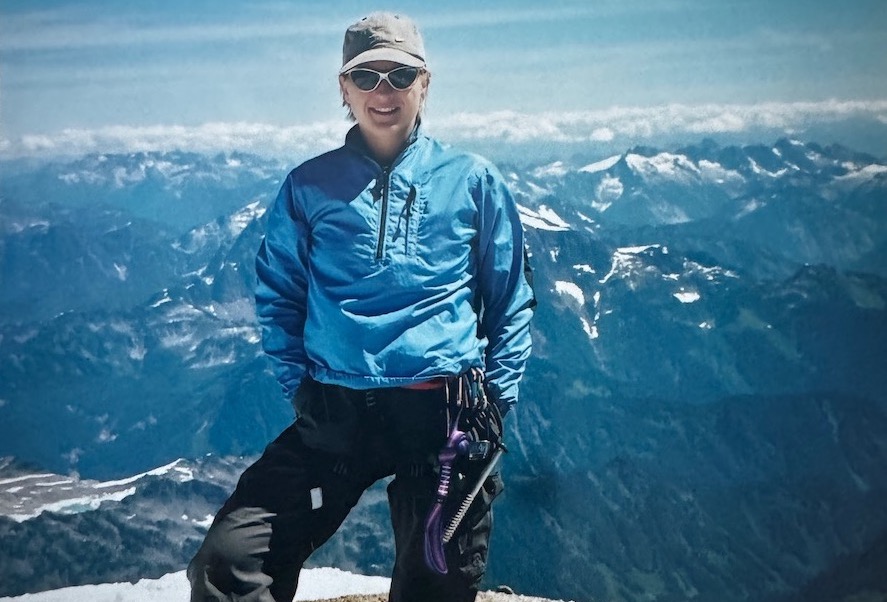
When we reached the summit, I felt triumphant but also complete, like something that had been left open for nine years had finally been allowed to close. I thought of Sam. I thought of the version of me who’d turned back all those years ago.

That first attempt taught me something I don’t think anything else could have. Not a course, not years of hiking beforehand, not any amount of imagining myself into the scenario from the safety of home. I had to actually be on that glacier to find out where my readiness really stood – further than my fear was telling me but not as far as I’d hoped. Going anyway wasn’t the mistake. It was the only way I was ever going to learn the truth of it, about the mountain and about myself. I just wish that particular lesson hadn’t come at the cost it did.
Thirty years later, I still work with people standing at the base of their own mountains, and I tell them the same thing I eventually learned on that glacier. Readiness isn’t something you wait to feel. It’s something you find out by moving, one honest step at a time.